
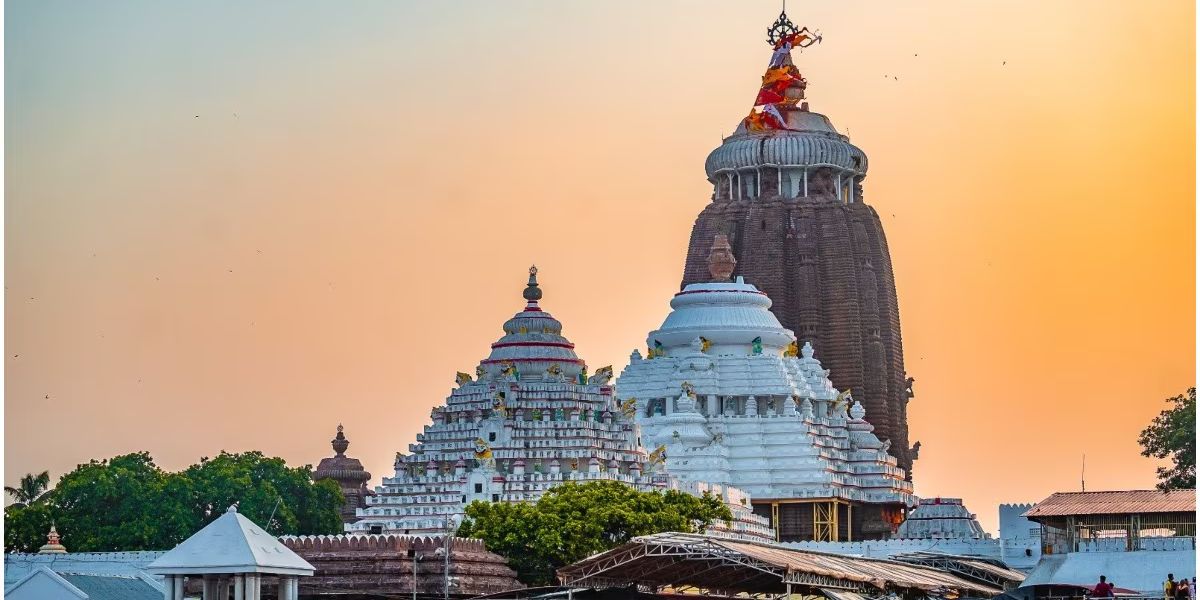
About Jagannath Temple
Rituals & Festivals
Daily Rituals (Nitis)
The Jagannath Temple follows a traditional schedule of daily rituals known as Nitis, performed by designated temple servitors.
- Mangala Aarti: Early morning prayers to awaken the deities.
- Mailama: Changing the deities' clothes and decorations.
- Abakasha: Ceremonial cleansing and preparation of the deities.
- Sakala Dhupa: Morning food offerings.
- Madhyana Dhupa: Midday food offerings.
- Sandhya Aarti: Evening prayers and worship with lamps.
- Badasinghara Besha: Final nightly decoration before the deities retire.
Major Annual Festivals
Sacred Tradition: The temple's daily rituals, elaborate festivals and Mahaprasad offerings preserve centuries-old traditions and reflect the spiritual and cultural identity of Odisha.
Note: Festival dates follow the Hindu lunar calendar, so Gregorian month ranges may vary each year.
History of Shri Jagannath Temple, Puri
1. Historical Origins
The Shri Jagannath Temple, located in Puri, Odisha, is one of the most sacred Hindu pilgrimage sites in India. Dedicated to Lord Jagannath, an incarnation of Lord Vishnu, the temple represents Odisha's rich spiritual, cultural and architectural heritage.
The present monumental temple was initiated in the 12th century CE by King Anantavarman Chodaganga Deva of the Eastern Ganga dynasty. Successive rulers contributed to its completion and expansion. Over the centuries, it became a major centre of religious, cultural and political life in Odisha.
2. Temple Architecture
The temple is a magnificent example of Kalinga architecture, with its main tower rising approximately 214 feet above the ground.
The principal structures include:
- Vimana (Rekha Deula): The main sanctum housing the deities.
- Jagamohana: The assembly hall for devotees.
- Natamandapa: The traditional dance and ceremonial hall.
- Bhogamandapa: The hall associated with food offerings.
The temple complex is surrounded by fortified walls and contains numerous smaller shrines.
3. The Sacred Deities
The temple is famous for its three principal wooden deities:
- Lord Jagannath: Worshipped as a form of Lord Vishnu and Krishna.
- Lord Balabhadra: The elder brother of Lord Jagannath.
- Devi Subhadra: The sister of Jagannath and Balabhadra.
Unlike most Hindu temples, these deities are made from sacred Neem wood, known as Daru.
The tradition of Nabakalebara involves ceremonially replacing the wooden deities when an additional Ashadha month occurs in the Hindu lunar calendar.
4. Sacred Structures
- Singhadwara: The main eastern entrance, also known as the Lion Gate.
- Baisi Pahacha: The twenty-two sacred steps associated with various religious traditions and ancestral offerings.
- Aruna Stambha: A sixteen-sided monolithic pillar traditionally believed to have been brought from the Konark Sun Temple.
- Nilachakra: The sacred wheel atop the temple tower, representing Lord Vishnu's Sudarshana Chakra.
Famous Mahaprasad & Bhoga · ପ୍ରସାଦ ଓ ଭୋଗ
Mahaprasad (Abhada, Khaja, Manda Pitha)
Cooked traditionally in sanctified earthen pots following centuries-old Odishan temple culinary traditions and offered to the deity before distribution to devotees.
Major Festivals · ପ୍ରମୁଖ ପର୍ବପର୍ବାଣୀ
Annual sacred rituals, grand processions, and auspicious celebrations observed at Jagannath Temple: