
Sanctuary Profile·ମନ୍ଦିର ଇତିହାସ
About Dhauli Shanti Stupa
History of Dhauli Shanti Stupa
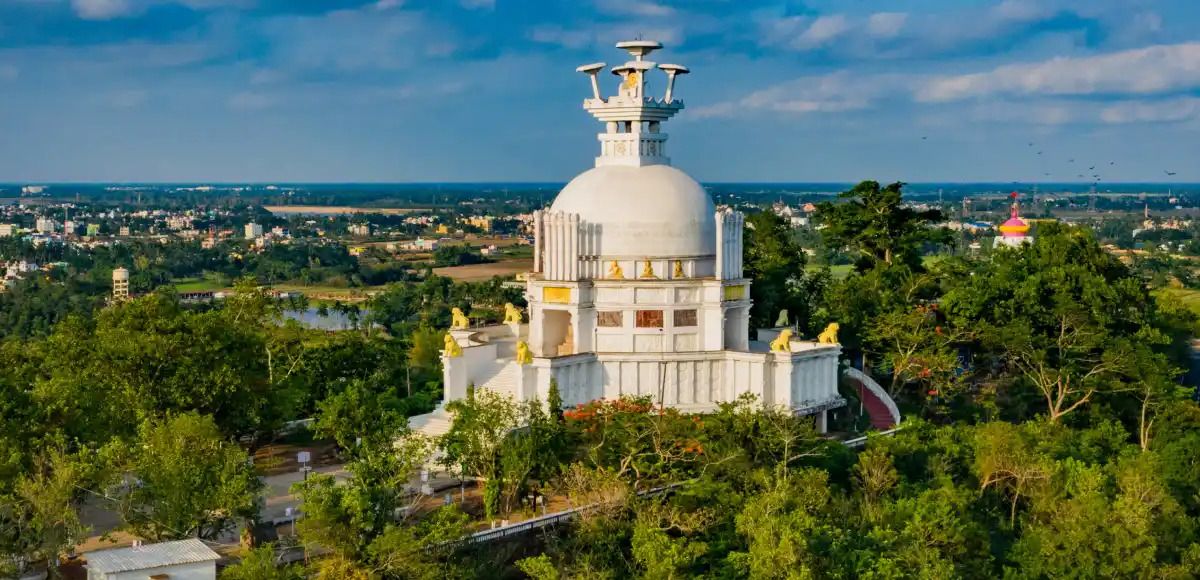
The Dhauli Shanti Stupa (Peace Pagoda), located on Dhauli Hill near Bhubaneswar, Odisha, symbolizes a historic shift from ancient wartime bloodshed to the global spread of Buddhist peace.
1. Ancient Roots: The Kalinga War (c. 260–261 BCE)
- The Battlefield: Dhauli is widely recognized as the main site of the Kalinga War, fought between Emperor Ashoka of the Mauryan Empire and the independent kingdom of Kalinga.
- The Aftermath: The massive casualties reportedly turned the nearby Daya River red with blood. Deeply shaken by the scale of human suffering, Ashoka underwent a profound moral transformation.
- Embracing Dharma: Ashoka renounced military conquest, dedicated his reign to Dharma (righteousness and non-violence), and adopted Buddhism.
- Ancient Edicts: At the base of Dhauli Hill stand Ashoka’s famous rock edicts alongside a 3rd-century BCE rock-cut elephant (considered India's oldest surviving rock-cut sculpture), symbolizing the birth of Gautama Buddha.
2. Modern Construction of the Stupa (1972)
- Indo-Japanese Vision: Inspired by the first Shanti Stupa in Rajgir, Bihar, Odisha Governor Nityananda Kanungo and Buddhist leaders proposed building a peace pagoda at Dhauligiri.
- Builders: The monument was constructed through a collaboration between the Japan Buddha Sangha and the Kalinga Nippon Buddha Sangha, led by Nichidatsu Fujii (Fuji Guruji) and Nipponzan Myohoji monks.
- Inauguration: The white dome-shaped monument was officially inaugurated on November 8, 1972.
3. Architecture and Key Features
- Structure: Built in a traditional hemispherical Peace Pagoda design crowned with umbrella-like finials (chatras).
- Sculptures & Panels: The exterior features carved stone panels illustrating major events from Buddha's life, four Buddha statues in distinct mudras (Dharmachakrapravartana, Bhumisparsa, Mahaparinirvana, and Varada), and stone lions guarding the premises.
- Surroundings: The stupa sits beside the historic Lord Dhavaleshwar Temple and offers panoramic views of the Daya River valley.