
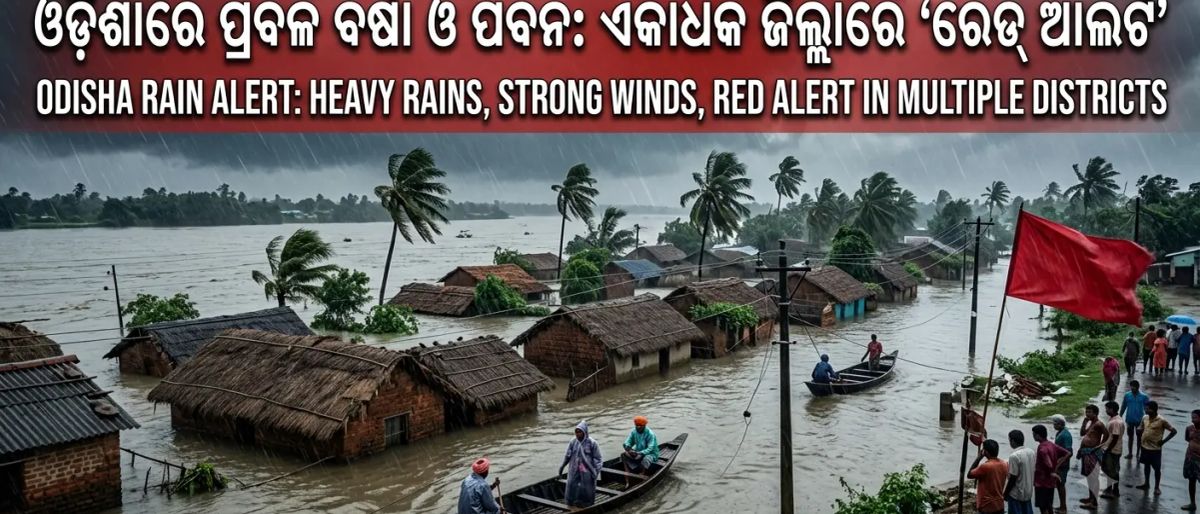
🌧️ Heavy Rain & Coastal Winds Trigger Red Alert in Odisha | ଓଡ଼ିଶାରେ ବର୍ଷାର ତାଣ୍ଡବ: ଏକାଧିକ ଜିଲ୍ଲା ପାଇଁ 'ରେଡ୍ ଆଲର୍ଟ
Summary
Red Alert Issued: The India Meteorological Department (IMD) has issued a Red Warning for several Odisha districts, forecasting heavy to extremely heavy rainfall and strong coastal winds over the next 1–3 days.
Share this story with your friends.
Full Story
IMD Issues Red Alert for Odisha as Severe Heavy Rainfall and Strong Winds Threaten Flood-Hit Regions
BHUBANESWAR — The India Meteorological Department (IMD) has issued a Red Warning for several districts across Odisha, forecasting heavy to extremely heavy rainfall accompanied by strong, squally coastal winds over the next 24 to 72 hours. The fresh spell of torrential rain threatens to exacerbate severe conditions in communities already vulnerable to ongoing seasonal flooding.
⛈️ Weather Drivers & Systems
- Low-Pressure Intensification: An active cyclonic circulation over North Odisha and adjoining Gangetic West Bengal is concentrating into a prominent low-pressure system over the northwest Bay of Bengal.
- Sustained Moisture Inflow: An upper-air cyclonic circulation near South Gangetic West Bengal continues to channel heavy, moisture-laden monsoon winds across the state.
- Coastal Winds: Squally weather with gusty winds is expected along and off the Odisha coast, triggering warnings for fishermen and coastal communities.
🌊 High-Risk Districts & Rising River Levels
- Rivers Breaching Danger Marks: Water levels in the Salandi and Jalaka rivers have crossed danger thresholds, elevating flood threats in nearby belts.
- Districts Under Alert: Key affected areas include Mayurbhanj, Balasore, Bhadrak, Keonjhar, Kendrapara, and Jagatsinghpur.
- Impact Risks: High potential for urban waterlogging, localized flash floods, road disruptions, and agricultural inundation.
🛡️ Public Safety & Operational Guidance
Local administrations have advised residents in low-lying and riverine zones to monitor official updates, avoid near-river activities, and maintain emergency readiness for potential evacuations.